

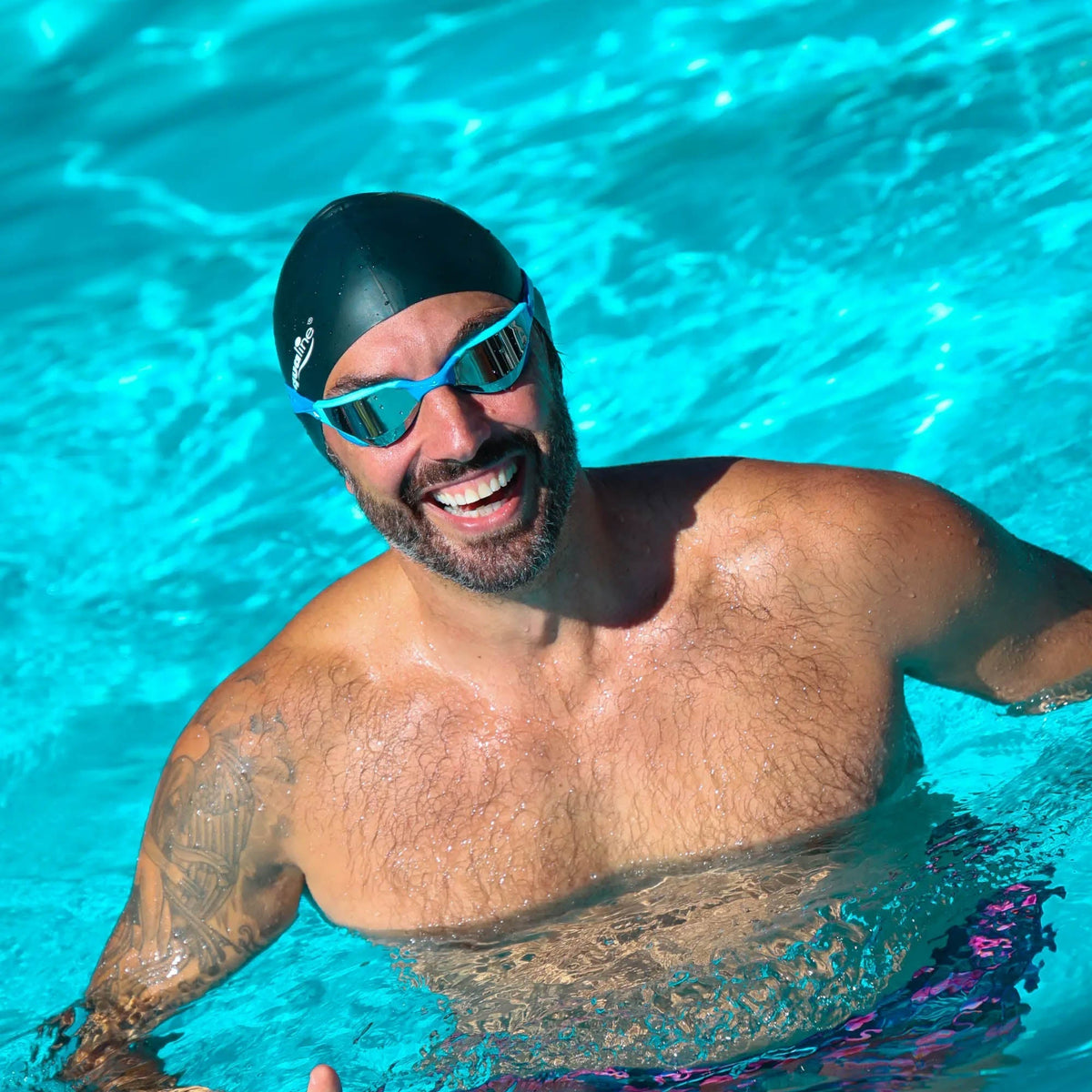
The Best Adult Swim Cap for Every Type of Swimmer (NZ Guide)
Here's a fun (or maybe not so fun) thing about swim caps: there are so many different types, and they honestly all look exactly the same.
However, picking the wrong one is a special kind of frustrating that only becomes clear once you're already in the pool, staring at your lane and wondering why your cap is halfway off your head by lap two.
The right cap depends entirely on what you're doing in the water and what you need from it. A 6 am lap regular needs something completely different from an ocean swimmer doing winter dips.
Someone with a thick bun needs something different from a competitive swimmer who's clocked up more kilometres than they'd care to admit.
Those whose skin reacts to latex shouldn't have to guess the ingredient list of their swim cap poolside.
No cap does everything well for everyone.
So, we won’t pretend that there's one universal answer. We've matched six common swimmer types to the cap that fits their situation and put together a buying guide to help you figure out which swim cap is the best for you.
How We Choose: What Makes a Good Swim Cap for Each Swimmer
The honest answer is that "best" looks very different depending on who you're asking. Before we get into the picks, here's what we actually considered for each swimmer type.
Everyday lap swimmers
The priorities are comfort for regular use and durability against chlorine. A cap that gives you a headache or tears quickly isn't a good choice, especially if you’ll be using it often.
Casual and recreational swimmers
Comfort is the most important factor. If you only swim occasionally, you want a cap that feels good, fits without being too tight, and is easy to put on. Not some Olympic-grade, Michael Phelps endorsed, kind of cap.
Long hair swimmers
Fit and size are what matters. Normal caps often feel too tight for long hair, causing them to shift during your swim. You need a cap that fits all your hair while staying in place and keeping your hair dry.
Sensitive skin and latex allergies
The material decision is already made. Silicone is hypoallergenic and latex-free, and that's not a negotiable trade-off. The question then becomes which silicone cap fits best and lasts longest.
Cold water and ocean swimmers
Staying warm is essential for ocean swimmers. No amount of comfort or colour range matters if the cap isn't keeping you warm in cold water. The cap should also stay in place when worn with a wetsuit as you won’t want to battle ocean currents and a cap that’s sliding off.
Competitive swimmers
Drag reduction and technique take the lead. This is a specific use case with specific requirements around fit at race pace and what the rules at your club or event allow.
The Best Swim Caps at a Glance
|
Swimmer type |
Best pick |
Price (NZD) |
|
The everyday lap swimmer |
$16.99 |
|
|
The casual or recreational swimmer |
$15.99 |
|
|
Long hair, buns, and braids |
$22.99 |
|
|
Sensitive skin or latex allergies |
$16.99 |
|
|
Cold water and ocean swimmers |
Zone3 Neoprene Swim Cap |
|
|
Competitive swimmers |
Speedo Silicone Aqua V Swim Cap |
The Best Swim Cap for Every Type of Swimmer
The Everyday Lap Swimmer
Our pick: Aqualine Silicone Cap ($16.99)
The best choice for regular swimmers is the Aqualine Silicone Cap, a reliable and comfortable cap that handles chlorine and long swims well.

If you swim several times a week, you need a cap that stays in place so you don't have to keep adjusting it or worry about it being uncomfortable.
Silicone earns its place here because it stays soft and stretchy over months of regular use, handles chlorine far better than latex in the long run, and doesn't snag or pull when you take it off. A good silicone cap, rinsed and dried after each swim, lasts the whole season and then some.
The Aqualine Silicone Cap fits most adults comfortably without being too tight. It stays in place during turns and doesn't leave a painful pressure ring on your forehead. If you want a more colourful option, we also offer the Multi-Colour Silicone Cap for $17.99.
The Casual or Recreational Swimmer
Our pick: Aqualine Lycra Cap ($15.99)
The best cap for casual swimmers or those with kids is the Aqualine Lycra Cap. This soft, breathable cap focuses on comfort, making it a great fit for those who swim for fun.

Not every swim session needs to be serious. Some people just want to splash around with family or do a few gentle laps to relax after work.
For casual swimming, a Lycra cap is the better choice. It feels soft, doesn't put pressure on your head, and is easy to put on and take off.
The trade-off is that Lycra is more porous than silicone, so more water reaches your hair. If you're swimming occasionally rather than daily, that's unlikely to be a dealbreaker. Your hair isn't getting the chlorine exposure of a five-day training week, and the comfort difference is noticeable enough to be worth it.
The Aqualine Lycra Cap is also the lightest option in the range, which makes it an easy addition to a bag you're already carrying. For anyone dipping in and out of the pool on their own schedule, this is the cap that makes swimming feel easy.
Long Hair, Buns, and Braids
Our pick: Aqualine Long Hair Silicone Cap ($22.99)
The best choice for long hair is the Aqualine Long Hair Silicone Cap, built with extra room at the back to comfortably fit buns or braids while keeping a good seal.

This is one of those problems that sounds minor until you've spent three years wrestling with a cap that's two sizes too tight for your hair volume. Standard caps are often too small for long, thick, or natural hair. The result: the cap sits too high, shifts mid-session, lets water creep in around the edges, and does that fun slow-roll off your hairline by lap eight.
The Aqualine Long Hair Silicone Cap is designed around the actual shape and volume of a head with a bun in it. There's proper room at the back and across the crown, so the cap sits where it's meant to sit rather than hovering somewhere above it. It goes on cleanly, stays in position, and comes off without pulling. The silicone construction is gentle enough for daily use, which matters when you're putting it on and off five times a week. If you've ever half-convinced yourself you're just not a cap person, there's a reasonable chance you've simply been using the wrong cap.
Sensitive Skin or Latex Allergies
Our pick: Aqualine Silicone Cap ($16.99)
The best swim cap for sensitive skin or latex allergies is the Aqualine Silicone Cap, which is latex-free, hypoallergenic, and considerably gentler against skin than the latex alternative.

Latex allergies are more common than most people realise, and a reaction at the hairline isn't the kind of thing you want to figure out mid-squad session. Ideally after your cool-down, not during it. Silicone sidesteps that entirely. It's the same reason silicone has largely replaced latex as the everyday training cap for swimmers who aren't racing competitively.
Beyond the allergy angle, silicone simply feels better against skin. It doesn't have that grippy texture that latex develops, and it doesn't catch fine hairs around the hairline the same way. If you've found cap-wearing vaguely uncomfortable for years and couldn't quite identify why, the material is often the answer. Worth trying before writing off swim caps entirely.
The Aqualine Silicone Cap is $16.99 and, with regular use, will outlast a latex cap by a long stretch. Good news for your morning routine, your gear bag, and your hairline.
Cold Water and Ocean Swimmers
Our pick: Zone3 Neoprene Swim Cap
The best swim cap for cold water and ocean swimming in New Zealand is a neoprene cap, and Zone3's Heat-Tech Neoprene Cap is the pick, offering real warmth and a chin strap that keeps it in place whatever the conditions.
New Zealand open water is a different conversation from a heated pool. Even in summer, the average water temperature can feel cold for most swimmers. When you're out there, keeping your head and ears warm is a genuine priority, as they're among the first places the cold hits, and a neoprene cap is built specifically for that job.
Zone3's Heat-Tech cap uses 4mm neoprene to hold heat while keeping a smooth, low-drag outer surface. The adjustable chin strap fits properly across a range of head sizes and stays put with a wetsuit rather than riding up mid-swim. It's a specific tool for a specific situation, and for anyone swimming regularly in NZ open water, it's worth having in the kit.
Competitive Swimmers
Our pick: Speedo Silicone Aqua V Swim Cap
The best swim cap for competitive swimmers is the Speedo Silicone Aqua V, a racing-specific silicone cap engineered to reduce drag so you can focus on the race, not your gear.
Developed in Speedo's in-house research lab, the Aqua V is built around one goal: speed. Its multi-density silicone construction uses a thicker top section to hold a wrinkle-free shape through the water, and a thinner mid-section that stretches to fit comfortably. The result is a cap that sits smooth against your head at race pace and delivers a measured 5% drag reduction compared to a standard silicone cap. That's a real number, from real testing, not marketing copy.
The Aqua V comes in two sizes for a more accurate fit, though it runs on the snug side, so sizing up is worth considering for most adults. It meets NCAA and high school logo-size regulations for competition.
However, for competitive swimmers who train mostly for fitness and only race occasionally, Aqualine's Silicone Cap is still the more comfortable choice for day-to-day sessions. Save the racing cap for race day.
What Makes a Swim Cap Right for You?
The six swimmer types above cover most situations, but if you're still not sure which way to go, these are the questions worth working through before you buy.
Head size and fit
Most adult swim caps are sold as one-size-fits-most, and that covers the majority of heads well enough. But a cap stretched to its limit on your head behaves differently from one that fits properly. If you find caps rolling up from the back or sitting tight at your temples, a longer-hair or larger-cut design is worth trying even if your hair isn't particularly long. The extra volume changes how the cap sits.
For junior swimmers, proper junior sizing matters more than most parents realise. An adult cap on a child's head won't seal properly. It sits loose, lifts at the edges, and lets water in freely. A cap that's constantly slipping is going to put a young swimmer off wearing one at all, and that's a tantrum nobody needs before 8 am on a Saturday.
Check the sizing guide before ordering for kids and save yourself the poolside negotiation.
How often you swim
Swim frequency is one of the main factors in choosing between silicone, Lycra, and latex.
Silicone holds up well to daily pool use over months, handles chlorine without falling apart, and keeps its stretch and shape through a full season.
Lycra is the most comfortable option but more porous, making it better suited to occasional swimmers than daily training loads.
Latex wears out faster under frequent chlorine exposure and typically needs replacing within weeks for regular swimmers.
If you're in the pool five days a week, silicone is the most practical long-term choice. If you swim a few times a month, Lycra is worth serious consideration.
Hair dryness versus comfort
Swim caps reduce how much chlorinated water reaches your hair. They don't keep your hair dry. That's worth knowing before you buy a cap expecting it to work as a waterproof seal, because no cap does that.
If protecting your hair from chlorine is the goal, a well-fitting silicone cap handles it well.
If keeping hair out of your face is more the point than staying dry, a Lycra cap is the most comfortable option. It's softer, more breathable, and feels considerably less like having your head wrapped in a second skin.
For the most protection from water getting through, a tight-fitting silicone cap with a good seal at the hairline is your best bet.
Hair type and length
Short hair and standard-volume hair fit comfortably in most silicone caps. Long, thick, natural, or bunned hair needs a long hair design.
Standard caps pulled over a lot of hair sit too high to seal properly, and no amount of adjusting fixes that. Fine hair can have the opposite problem: some caps feel loose when there isn't enough volume to fill them. A tighter or smaller-cut silicone design is worth trying in that case.
Casual versus competitive
For everyday swimmers, ocean dippers, and anyone in the water for fun, fitness, or the deeply underrated pleasure of an hour to themselves, the priorities are comfort, durability, and hair compatibility. That's the sweet spot for Aqualine's silicone and Lycra range.
For competitive swimmers, drag reduction becomes a real priority. Take your cues from your club or coach, as they'll have specific preferences based on your events and what your meet rules allow.
How much use you'll actually get out of it
A cap you'll use four or five times a week is worth spending properly on. The comfort difference over a full season adds up, and the longevity of a good silicone cap means you're not replacing it every few weeks. A cap for occasional use, a spare, or a specific open water situation doesn't need to be your main investment.
The Aqualine range runs from $15.99 to $22.99. For that, you're getting swim gear that holds its shape, feels comfortable from the first session, and was made by a family-owned Kiwi brand that's been doing this for over 50 years.
Final Word
Choosing a swim cap should be simple.
Once you know what kind of swimmer you are, the choice is easy.
For most Kiwi swimmers, whether you're clocking early morning laps at your local pool, managing a thick bun, swimming with skin that's never quite got along with latex, or just after the most comfortable cap to wear on your own schedule, the Aqualine range covers it well. Comfortable from the first session, built to handle real pool use, and made by a 100% Kiwi-owned brand that's been doing this for over 50 years.
For cold-water ocean swimming, neoprene is the right call. For competition, your club will have preferences worth following.
For everything else, Aqualine has swim gear for the whole family. Now go get in the water.
%20thing%20about%20swim%20caps:%20there%20are%20so%20many%20different%20types,%20and%20they%20honestly%20all%20look%20exactly%20the%20same.%0AHowever,%20picking%20the%20wrong%20one%20is%20a%20special%20kind%20of%20frustra...)