
Article: Their First Swim: A Parent's Guide to Taking Babies and Toddlers to the Pool (NZ)
Their First Swim: A Parent's Guide to Taking Babies and Toddlers to the Pool (NZ)
There is something genuinely wonderful about a baby in a pool for the first time. The wide eyes. The cautious little kicks. The moment they realise water is actually fun and not, in fact, a threat to their entire existence.
There’s also the chaos. The forgotten swim nappy. The towel that's still damp from last time. The three bags you swore would be enough. The change table queue.
The first swim is memorable for all kinds of reasons.
This guide is here to help with the parts you can actually control: when to go, what to bring, what to expect, and how to make it a good experience for both of you. The rest, you'll figure out on the day.

When can babies start swimming?
The short answer is around six months old for public pools.
Plunket recommends babies be at least six months old before swimming in a public pool. By this age, their immune system has developed enough to handle public water, they can hold their head up, and their ears can cope better with water exposure.
Before six months, take extra care with public pools as infants are still developing their immune system, temperature regulation, and head control. Babies under two to three months may be more sensitive to infection and temperature changes.
That said, every child is different. It's worth considering your baby's individual readiness rather than going strictly by the calendar.
If your little one isn't six months yet, bath time is a genuinely good starting point. Gentle splashing, water over the face, kicking in a warm tub. It all builds familiarity before the big pool debut.
A note on water temperature
Babies can't regulate their body temperature the way adults can, so pool temperature matters more than most parents realise.
For little ones older than three months, the water should be at least 30°C. If your baby starts to shiver at any point, take them out of the water, dry them with a soft towel, and warm them up immediately. If the water feels cold to you, it’s definitely too cold for an infant.
Pools above 37.8°C are not safe for children under three years old.
Most heated public pools in New Zealand sit around 28-32°C, which is comfortable for adults but on the cooler side for babies. Call ahead to check the temperature before your first visit, particularly in winter.
How long should the first session be?
Keep it short. Young babies should spend no more than 10 to 15 minutes in the water during their first few trips to the pool. When they're under a year old, limit pool time to 30 minutes maximum.
Toddlers can usually manage a bit longer, but watch for signs they're done: shivering, grizzling, or that particular glazed look that means meltdown is approximately ninety seconds away.
What to expect at your first swimming session
Managing expectations before you arrive makes the whole thing easier.
It might not go the way you imagined
Some babies take to the water immediately and never want to leave. Others spend the first session completely unimpressed, clinging to you like a small, wet koala. Both are completely normal.
Water familiarisation, which is what the first few sessions really are, is not about swimming. It's about building a positive association with being in the water. Getting in, feeling safe, and leaving on a good note is a successful first session, full stop.
Crying is fine
If your baby cries, it doesn't mean you've done something wrong or that they'll be afraid of water forever. It usually means they're uncertain, overstimulated, or just not feeling it today. Stay calm, keep your voice warm, and if they're genuinely distressed, get out. There's always next week.
You will be in the water too
For babies and toddlers, you're in the pool with them. Every session. There's no dropping them at the edge and watching from the stands. Plan your own gear accordingly.
Book a lesson if you can
Most NZ swim schools offer parent-and-baby classes from six months. A qualified instructor will show you how to hold your baby safely in the water, introduce them to floating and submersion in a structured way, and give you confidence in the water together. It's worth looking into your local swimming pool’s programmes.
What to pack for your infant or toddler’s first time swimming
This is the section to bookmark.
First-time pool trips have a way of revealing all the things you forgot to pack, and most of those things are small, annoying, and very important.
Checklist for their first swim
- Armband or Baby Trainer Seat
- Goggles (for 2+ years)
- Swim Cap
- Hooded Towel
- Wet Bag
- Swim Nappy
- Swim Suit or Rash Guard
- Post-Swim Nappy
- Change of Clothes
- Non-Slip Pool Socks
- Snacks and a Drink
- Sunscreen (for outdoor pools)
- Ear Drops or Cotton Buds
Armbands or a Baby Trainer Seat
The right floatation support depends on your child's age and how confident they are in the water.
Aqualine Baby Trainer Seat ($44.99) is a great starting point for babies from around six months to roughly eighteen months. It holds your baby securely in a seated position in the water, keeping them upright and supported while you interact with them. It's particularly useful in the early sessions when they're still getting used to the sensation of being in the water.

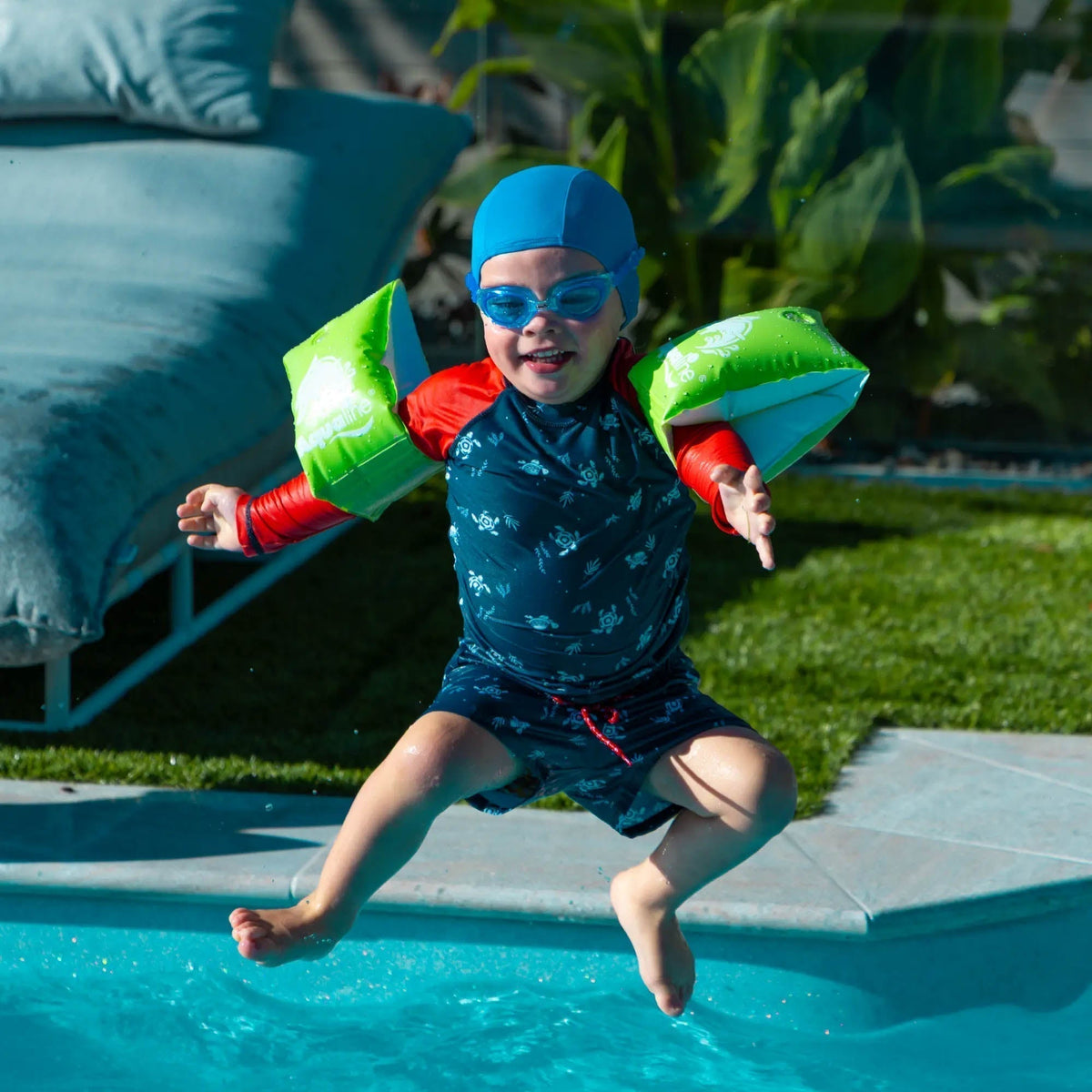
Aqualine Armbands ($18.99) and Roll Up Armbands ($19.99) give older toddlers, around two to three years, a bit more independence in the water while still keeping them safely afloat. The Roll Up Armbands are compact and easy to pack.
Swim Ring (2-3 Years, $24.99) and Swim Ring (3-6 Years, $24.99) are another option as they get bigger, giving them more freedom to move and play in the water while still having something to hold onto.
One important note: floatation aids are a support tool, not a substitute for supervision. Keep your little one within arm's reach at all times, regardless of what they're wearing.
Goggles
Goggles aren't essential for infants and very young toddlers. In the early sessions, the goal is water familiarisation rather than swimming laps, and most babies aren't putting their heads under water just yet.
This is a crucial safety skill to ensure children won’t freak out when water gets in their eyes.
That said, toddlers from around two to three years often start wanting to look under the water, and that's exactly when goggles become genuinely useful.
Aqualine Rainbow Goggles ($23.99) are a great first goggle for kids under 5. They're our most popular goggles for toddlers as they’re lightweight, easy to adjust, and soft around the face so they're comfortable for little ones still getting used to the idea of something on their eyes. They also have a quick release clip system, making it easy to put them on and take off!

If you're not sure whether your child is ready for goggles yet, hold off. A toddler who doesn't want goggles on will let you know very clearly, and it's not a battle worth having on the first trip.
Swim Cap
A swim cap keeps hair out of their face, reduces chlorine exposure to their hair, and makes the post-swim rinse considerably easier.
Junior Lycra Cap ($15.99) is the most comfortable option for young kids. It's soft, stretchy, and goes on without a fight, which matters when you're trying to get a wriggly toddler pool-ready. For older toddlers in and out of the water more frequently, the Junior Silicone Cap ($16.99) is more durable and offers better protection from chlorine over time.

Aqualine Dinosaur Children's Silicone Swim Cap ($19.99) and the Fairy Princess Silicone Cap ($19.99) are worth a look if you have a child who needs a little extra convincing to keep a cap on. Bribery via dinosaurs has a reasonable success rate.
Towel Poncho
This is the one piece of gear you will be genuinely grateful for the moment you lift a wet, cold toddler out of the pool and need to wrap them up immediately with one hand while carrying a nappy bag with the other.
Aqualine Toddlers Hooded Towel Poncho ($69.99) is 100% cotton, fast-drying, and covers them head to toe with the hood already built in. No juggling a flat towel while your toddler makes a break for the change room exit. The Kids Hooded Towel Poncho ($74.99) covers older children who have grown out of the toddler size.

The poncho also doubles as a changing robe if your pool's change facilities are on the colder side, which in New Zealand, they sometimes are.
Mesh Gear Bag
Swim gear that goes straight into a closed bag after the pool comes out smelling like regret.
Aqualine Mesh Gear Bag ($24.99) lets everything breathe on the way home, so wet goggles, damp caps, and soggy armbands can air out rather than sitting in a sealed environment until next week. It's also just easier to find things in a mesh bag than in an opaque tote, which is a small but meaningful win when you're packing up a toddler at the end of a session.

Swim Nappy
Non-negotiable for babies and toddlers who aren't potty trained. Most NZ public pools require them, and they exist for very obvious reasons.
You have two options: disposable swim nappies, which are convenient for infrequent swimmers, or reusable swim nappies, which are more cost-effective if you're going regularly and much better for the environment. Brands like Splash About and Konfidence make reusable options widely available in NZ.
A note: a regular nappy is not a swim nappy. They absorb water and become completely useless almost instantly. Use the right one.
Swimsuit or Rash Guard
For babies, a simple one-piece swimsuit works well. Look for a snug fit with a swim nappy underneath.
For toddlers, a one-piece suit or rash guard and boardshorts combo both work well. If you're at an outdoor pool or the beach, a rash guard is worth considering for sun protection, particularly in the New Zealand summer when UV levels are high even on overcast days. Look for UPF 50+ rated swimwear.
Body Wash and Shampoo
Pool chemicals do a number on sensitive skin and hair. Packing a gentle, fragrance-free body wash and a mild children's shampoo means you can rinse everything off properly after the swim rather than leaving chlorine sitting on their skin for the rest of the day.
Nappy and Change of Clothes for Afterwards
Pack a full change of clothes, including a clean nappy, socks, and layers depending on the season. Toddlers who are cold and wet and tired after a swim are not known for their patience, so having everything ready and easy to access makes the post-swim change considerably less chaotic.
Non-Slip Pool Socks or Grip Footwear
Pool decks are wet and slippery, which is a combination that toddlers find genuinely thrilling and parents find terrifying. Non-slip pool socks or rubber-soled grip sandals help keep them upright on the way to and from the pool. Most are taken off before entering the water.
Snacks and a Drink
Swimming is surprisingly tiring for small people. A snack ready to go straight after the session helps ward off the post-swim hunger spiral and makes the car trip home considerably more peaceful. Avoid feeding just before the swim. Give it at least an hour between a full meal and getting in the water.
Sunscreen (for outdoor pools)
If you're heading to an outdoor pool or the beach, sunscreen is essential. For babies under six months, keep them out of direct sun entirely and use protective clothing and shade instead. For older babies and toddlers, use a mineral-based sunscreen rated SPF 50+, applied at least fifteen minutes before sun exposure.
Ear Drops or Cotton Buds
Some children are prone to swimmer's ear, particularly after repeated pool visits. Your GP or pharmacist can recommend preventive ear drops if this becomes an issue. Gently drying ears after every swim helps too.
Tips for making the first swim a success
A few practical things that make a genuine difference.
Go at a quiet time
A busy, noisy pool is a lot for a small child to take in. Early weekday mornings or just after school drop-off tend to be quieter than weekend sessions.
Warm the room first, not just the water
Getting undressed in a cold change room before a swim is unpleasant for adults and genuinely distressing for babies. If possible, dress them in their swimsuit at home and pop them straight into a onesie or layers over the top to keep them warm until you're poolside.
Get in first
If you're hesitant, they'll pick it up. Getting into the water confidently and calling them in sends a much clearer signal than hovering nervously at the edge.
Keep your voice calm and happy
Your tone is their reference point, especially in new situations. A warm, relaxed commentary goes a long way.
End on a good note
Get out before they're completely exhausted or distressed. Leaving while they're still happy, or at least neutral, means they'll associate the pool with a positive experience. Leaving after a meltdown does the opposite.
Don't rush submersion
Putting a baby's face underwater before they're comfortable with the idea, or doing it without warning, can set back their water confidence significantly. Let them lead on this one. It will happen in its own time.
Repeat the same routine
Kids this age thrive on predictability. If you do the same sequence each visit, getting changed, heading to the pool, getting in together, doing a few familiar activities, then rinsing off and wrapping up in the poncho, it becomes a ritual they recognise and feel safe in. The pool stops being a new, uncertain thing and starts being just what you do on Tuesdays.
You’re ready. Now get in the water
The first swim is rarely picture-perfect, and that's fine.
What it is, if you go in prepared and keep expectations realistic, is the beginning of something genuinely good. Kids who are comfortable in the water from a young age carry that confidence with them for life. And in New Zealand, where the beach, the river, and the public pool are part of the furniture, that matters.
Pack the swim nappy. Bring the poncho. Book the lesson.
For everything you need to get them in the water, Aqualine has swim gear for the whole family.